

New York's Trusted Restoration Company
- 24/7 Emergency Response
New York's Trusted Restoration Company
The New York metropolitan area is one of the most storm-exposed major urban regions in the country — facing nor’easters, tropical storms, coastal flooding, and severe summer weather events that generate thousands of property damage events every season. iFlooded Restoration is the Tri-State area’s storm restoration specialist — responding around the clock with the equipment, certification, and local market expertise that NYC metro storm recovery demands.
Storm damage in the New York metropolitan area takes many forms — and each demands a different restoration approach. A nor’easter that peels roofing from a Westchester County home creates a different damage profile than coastal storm surge flooding a Nassau County South Shore property, which differs again from a summer microburst that brings a tree through a Brooklyn brownstone’s roof. iFlooded Restoration provides storm restoration expertise across all of these scenarios, with local knowledge of the specific storm risks each part of the NYC metro faces.
Storm damage restoration in this market is complicated by the insurance landscape. Standard homeowner’s policies cover wind damage but not flood damage from storm surge or rising water — which requires a separate NFIP or private flood policy. When a storm causes both wind and water damage to the same property, the attribution of each damage element to the correct policy determines what each carrier pays. Without professional documentation and advocacy, NYC metro area property owners frequently recover less than their combined coverage entitles them to.
iFlooded Restoration works with every major insurance carrier and produces documentation that addresses both standard HO and flood policy claims. We understand the wind-versus-water attribution challenge in the NYC coastal market, we document it correctly from day one, and we work with your carrier to ensure your settlement reflects the full scope of your covered loss.
iFlooded Restoration provides complete storm restoration — from emergency securing and tarping through structural repair, flood cleanup, and final insurance documentation.
Immediate response to secure storm-damaged properties — tarping compromised roofing systems, boarding up broken windows and doors, and protecting exposed structural elements from additional weather damage before restoration begins.
Storm-related flooding — including storm surge, coastal flooding, roof water intrusion, and window/door breaches — requires immediate extraction and structural drying. We respond to all water intrusion events resulting from storm damage with full professional restoration.
Assessment and restoration of all wind-related structural damage — roof systems, siding, windows, gutters, fascia, and structural framing compromised by wind pressure or impact. Full reconstruction to pre-loss condition with documentation of all repairs for insurance.
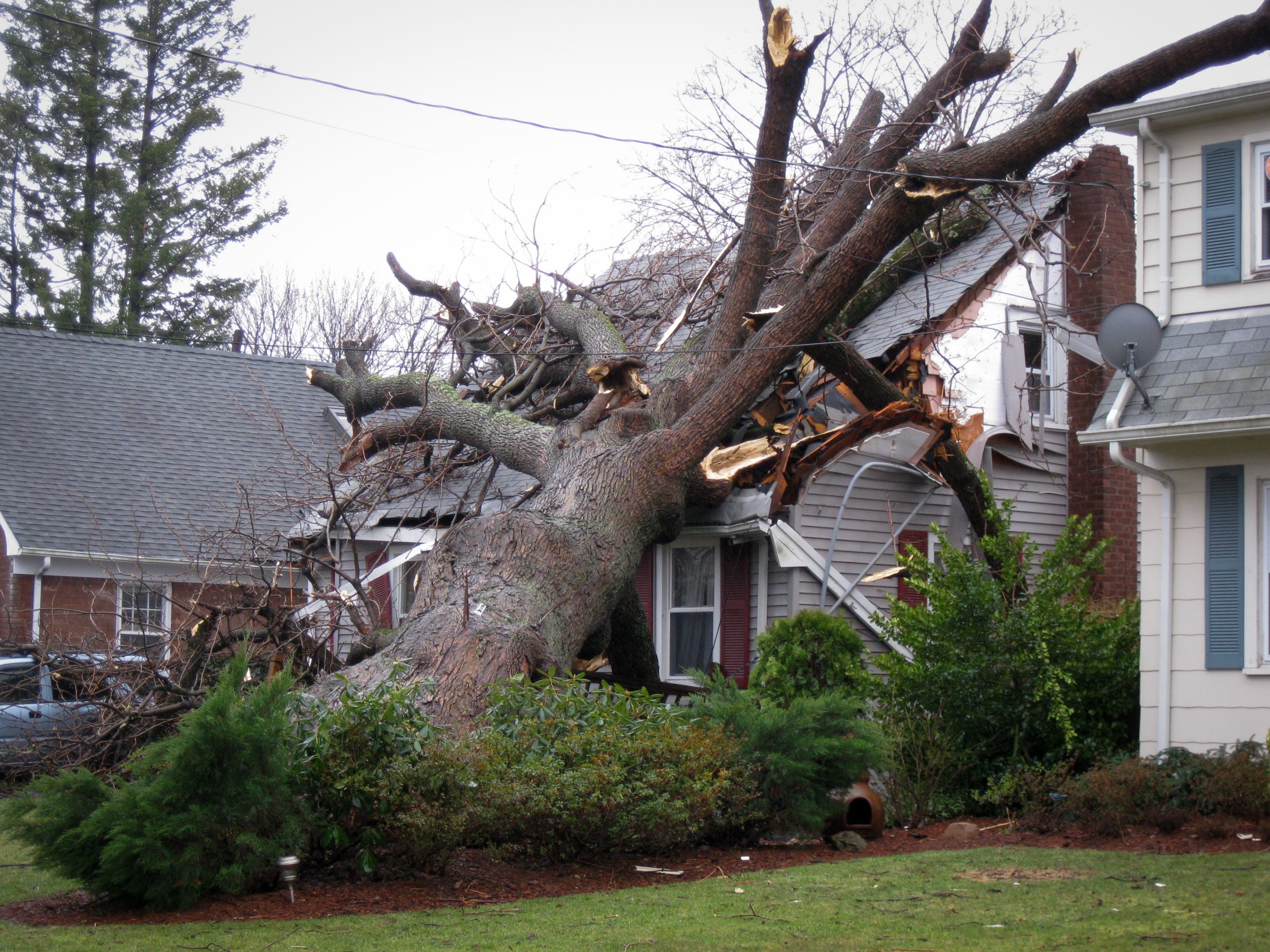
Storm-related tree fall and debris impact cause significant structural damage across the NYC metro area. We assess and document all impact damage, remove debris, and repair all structural elements affected by tree strike or debris impact.
South Shore Long Island, Staten Island, Queens coastal communities, and Westchester's Sound Shore communities face recurring coastal flooding. We provide full saltwater decontamination, structural drying, and NFIP-compatible insurance documentation for all coastal storm events.
Storm-related water intrusion creates rapid mold risk in the NYC metro's humid climate. EPA-approved antimicrobial treatment is applied to all storm-flooded materials as a standard step — preventing mold growth from compounding storm damage into a more costly combined loss.
Severe storms generate power surges and electrical damage that create hazards in damaged properties. We coordinate with licensed electricians for post-storm electrical assessment before restoration work proceeds in affected areas.
Complete storm damage documentation — photographs, moisture readings, wind damage assessments, and scope of damage reports — formatted for both standard homeowner's and flood insurance claims. We work directly with your adjuster throughout the process.
The New York metropolitan area faces a storm damage profile that reflects its unique geography. Coastal communities across Nassau and Suffolk counties’ South Shore, Staten Island’s eastern and southern shoreline, the Rockaways in Queens, and Westchester’s Sound Shore communities all face recurring nor’easter and tropical storm surge that generates major coastal flooding events every few years. Long Island’s hundreds of miles of bay and ocean exposure, combined with its flat terrain and high water table, create flooding conditions after storm events that are among the most frequent and damaging in any suburban market in the country.
Further inland, the NYC metro’s heavily wooded communities — Westchester County, northern Nassau County, and Bergen County in New Jersey — face significant wind damage from nor’easters and severe convective storms that down trees, destroy roofing systems, and breach building envelopes in ways that urban environments with less tree canopy do not experience. iFlooded Restoration responds to storm events in these communities with teams experienced in the specific restoration challenges that suburban and semi-rural storm damage creates.
New York City’s urban environment presents its own storm damage scenarios — damaged parapets and cornices on older commercial and residential buildings, flooded basement apartments during heavy rain from overwhelmed city storm drains, and flat-roof building systems that pond water and eventually fail under sustained storm exposure. Our teams operating from Manhattan, Queens, and Brooklyn offices are experienced with the full range of urban storm damage scenarios unique to the five boroughs.
Storm restoration requires a different sequencing than standard water or fire damage — because structural securing must precede documentation, and ongoing weather risk must be managed throughout the restoration process.

Storm damage requires different immediate actions than most other damage types — because the storm may still be active and re-entry to a damaged property carries significant safety risks.
iFlooded Restoration provides storm damage restoration services across the New York City metro area and the greater Tri-State region:
Bergen County, NJ | New Rochelle | White Plains |
Additional service areas include New Jersey, Connecticut, and all communities within the greater New York metropolitan area. Call (800) 874-8146 to confirm service availability at your location.
Answers to the most common questions NYC metro property owners ask about storm damage restoration.
A: Standard homeowner’s insurance in New York covers wind damage — damage caused directly by wind pressure, such as roof damage, siding failure, and broken windows from a storm event. It does not cover flood damage from storm surge or rising water, which requires a separate flood insurance policy through NFIP or a private flood carrier. Many NYC metro area homeowners — particularly in Nassau and Suffolk County coastal communities, Staten Island, and Westchester’s Sound Shore — carry both policies. We document the cause of each damage element separately to support claims under both your standard HO and your flood policy.
A: Call iFlooded Restoration at (800) 874-8146 immediately after the storm has passed and it is safe to re-enter your area. Storm surge flooding is categorized as Category 3 contaminated water — it carries bacteria, chemicals, and biological contamination from overflowing waterways and storm drains. This level of contamination requires biohazard-grade extraction and disinfection protocols, not standard water cleanup. We also document all storm surge damage in compliance with NFIP flood insurance requirements, which differ from standard homeowner’s claim documentation. Do not attempt to clean storm surge flooding yourself.
A: For properties that have already sustained damage and are at risk of additional weather exposure — such as a roof breach during an ongoing storm — we dispatch emergency securing teams to tarp and board up affected openings as soon as our crew can safely access the property. We do not place our team in unsafe conditions during active high-wind events, but we respond to emergency securing calls as quickly as conditions safely allow and are on-site for full assessment and restoration as soon as the storm passes. Call (800) 874-8146 during the event to get your property in the dispatch queue.
A: Tree strike is one of the most complex storm damage scenarios because the structural impact of a large tree can affect multiple building systems simultaneously — roofing, framing, insulation, interior ceilings and walls, and potentially foundation elements if the root ball shift is significant. We assess the full structural scope immediately, remove all debris, and engage licensed structural engineers where load-bearing elements are involved. We document every element of the impact damage for your insurance carrier and coordinate all trades — roofers, carpenters, framing contractors, and interior finishers — to restore the property to pre-loss condition.
A: Storm damage restoration involves several elements that standard water damage does not. Structural securing must happen first — storm-compromised roofing and openings create ongoing weather exposure that active water damage events do not. Wind damage documentation is a separate scope from water damage documentation and must be clearly differentiated for insurance purposes. Coastal storm events involving both wind and water require dual-policy documentation that internal water damage events do not. And storm debris removal — particularly in tree impact situations — requires coordination that burst pipe restoration does not. iFlooded Restoration manages all of these distinctions as a standard part of every storm restoration engagement.
A: Timeline depends heavily on the nature of the storm event and the extent of damage. Emergency securing — tarping and boarding — happens within hours of your call. Structural drying after storm flooding takes 3 to 5 days for standard residential properties. Structural repair and reconstruction ranges from 1 to 8 weeks depending on the scope: a broken window and minor roof damage at one end; a major tree strike or significant coastal flood event at the other. After major regional storm events affecting many properties simultaneously, contractor availability may affect reconstruction timelines. We provide a written timeline estimate after initial assessment.
A: iFlooded Restoration handles multi-unit and multi-floor storm damage restoration across commercial and residential buildings throughout NYC. Flat-roof drainage failures during storm events are a significant and recurring issue in NYC’s commercial and multi-family residential building stock. We deploy the equipment and crew capacity to address simultaneous water damage across multiple floors — extracting water, drying structural materials, and documenting damage in a format that works for commercial property insurance claims, including business interruption documentation where applicable.
Property damage rarely happens in isolation. iFlooded Restoration offers a complete range of restoration services across the NYC metro area:
Storm events can cause electrical fires from lightning strikes or downed lines. iFlooded Restoration provides integrated fire and storm restoration.
© 2026 iFlooded Restoration • All rights reserved.
New York's Trusted Restoration Company